
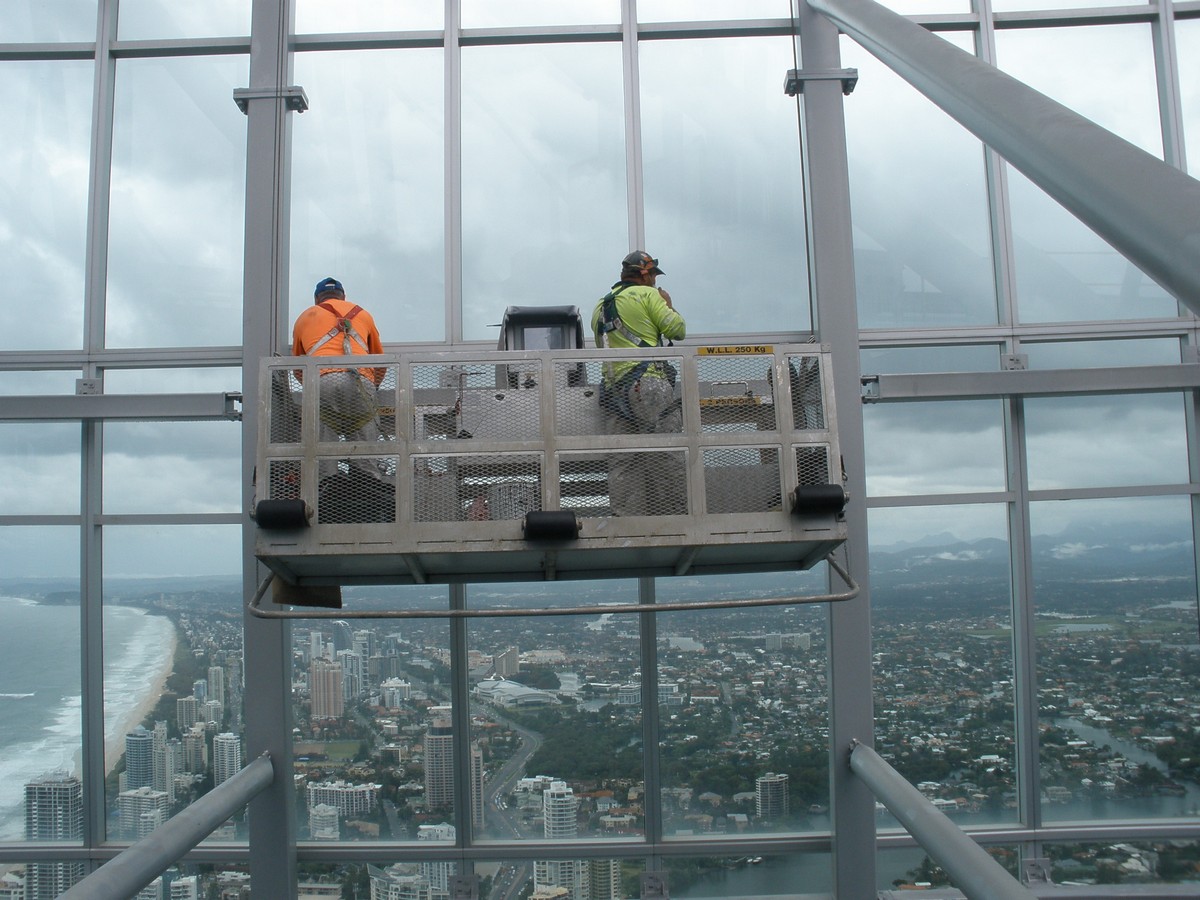
A full high rise repaint runs through seven stages: condition inspection, scope of works, access planning, remedial repairs, staged painting, quality inspections, and warranted handover, typically taking three to six months for a full tower depending on size, condition and weather. As for cost, honest contractors price high rise painting from a measured scope rather than a rate per square metre, because the three variables that dominate the number, the access method, the remedial quantum, and the building’s detail, vary so much between towers that a headline rate is a guess wearing a suit.
We have painted towers across South East Queensland for more than 40 years, up to and including 70-storey buildings, and the pattern across every successful project is the same: the outcome is decided in the first two stages, long before the first coat. So that is where this walkthrough spends its weight.
Stage 1: the condition inspection
Every elevation gets examined, at height where needed: substrate condition, coating failure modes (chalking, peeling, delamination), cracked render, spalling concrete, failed sealants and joints, waterproofing condition, and the detail work, balustrades, soffits, window surrounds, that quietly carries a third of the labour. The inspection produces the map the entire project is built on, and towers that skip it end up discovering their condition mid-project, at height, on variation pricing.
Stage 2: the scope of works, where towers are won and lost
The scope of works converts the inspection into the project’s single source of truth: surfaces and measured areas, preparation standards, remedial works itemised, the coating system specified in writing with the manufacturer, access methodology per elevation, staging, and the warranty. It is the most important document in the entire repaint, and here is the uncomfortable truth from four decades of tenders: the wrong scope, or a scope that misses things, does not save money, it defers cost into variations. Every gap becomes a mid-project negotiation, every negotiation happens with the contractor already on the building, and cost blowouts on tower repaints trace back to thin scopes far more often than to bad painters. Committees and building managers comparing quotes against no scope are comparing different jobs; a measured scope is what makes three numbers mean something.
Stages 3 and 4: access and remedial, in the right order
Access is planned elevation by elevation from the inspection map: rope access for coating work on sound facades, swing stages for concentrated vertical runs, EWPs for the podium, scaffolding where repair density demands a platform. Then the remedial works go first, always: concrete repairs, render restoration, sealant replacement and waterproofing, because coating over unrepaired substrates buys a finish that fails from underneath. Running remedial and painting under one contract with a single project manager, our standard model, is what keeps this sequence tight instead of stalled between two companies. The full detail of how we deliver high rise repaints and the remedial building work that always comes first sits on the service pages.
Stages 5 to 7: painting, inspection, sign-off
Painting proceeds in stages around the building, weather-managed, with residents and managers told what is happening where and when: balcony access windows, parking changes, clean-downs each day. Quality assurance runs through the stages rather than at the end, preparation inspected before it disappears under coats, film builds checked against the specification, so the defect walk at completion confirms rather than discovers. Handover means the documented walk against the scope, the manufacturer-backed warranty, and ideally a maintenance plan that protects the investment between cycles. Most tower coating work is carried out by the rope access crews we run on high rise facades, a mix of employed technicians and specialist teams engaged for the project, and the regime above does not change with the crew: same supervisors, same inspection points, same quality management plan.
How long, and how much
Timing: a mid-rise typically runs eight to sixteen weeks; a full tower, three to six months; and a six-month program on a major riverfront tower combining swing stage and rope access is a representative real-world shape. Cost: driven by measured area, access mix, remedial quantum, detail density and program, which is why the credible answer is a scoped fixed price, and why we put inspection and scope before any number. A tower priced from its actual condition holds its budget; a tower priced from a rate does not.
Frequently asked questions
How do you paint a high rise building?
Inspection, scope of works, elevation-by-elevation access planning, remedial repairs first, staged painting with in-progress QA, then a documented defect walk and warranted handover.
How long does it take to repaint a high rise?
Mid-rise buildings typically take eight to sixteen weeks; full towers run three to six months depending on size, condition, access and weather.
How much does high rise painting cost?
It is priced from a measured scope, with access method, remedial quantum and detail density the dominant drivers. Per-square-metre rates mislead because those three variables swing so widely between towers.
Why does the scope of works matter so much?
Because gaps in the scope become variations mid-project, and variations at height are the most expensive way to discover a building’s condition. An accurate scope is the cheapest risk control a tower repaint has.
Planning a tower repaint? Book the inspection or call 1800 313 083; the scope that comes out of it will protect everything that follows.