
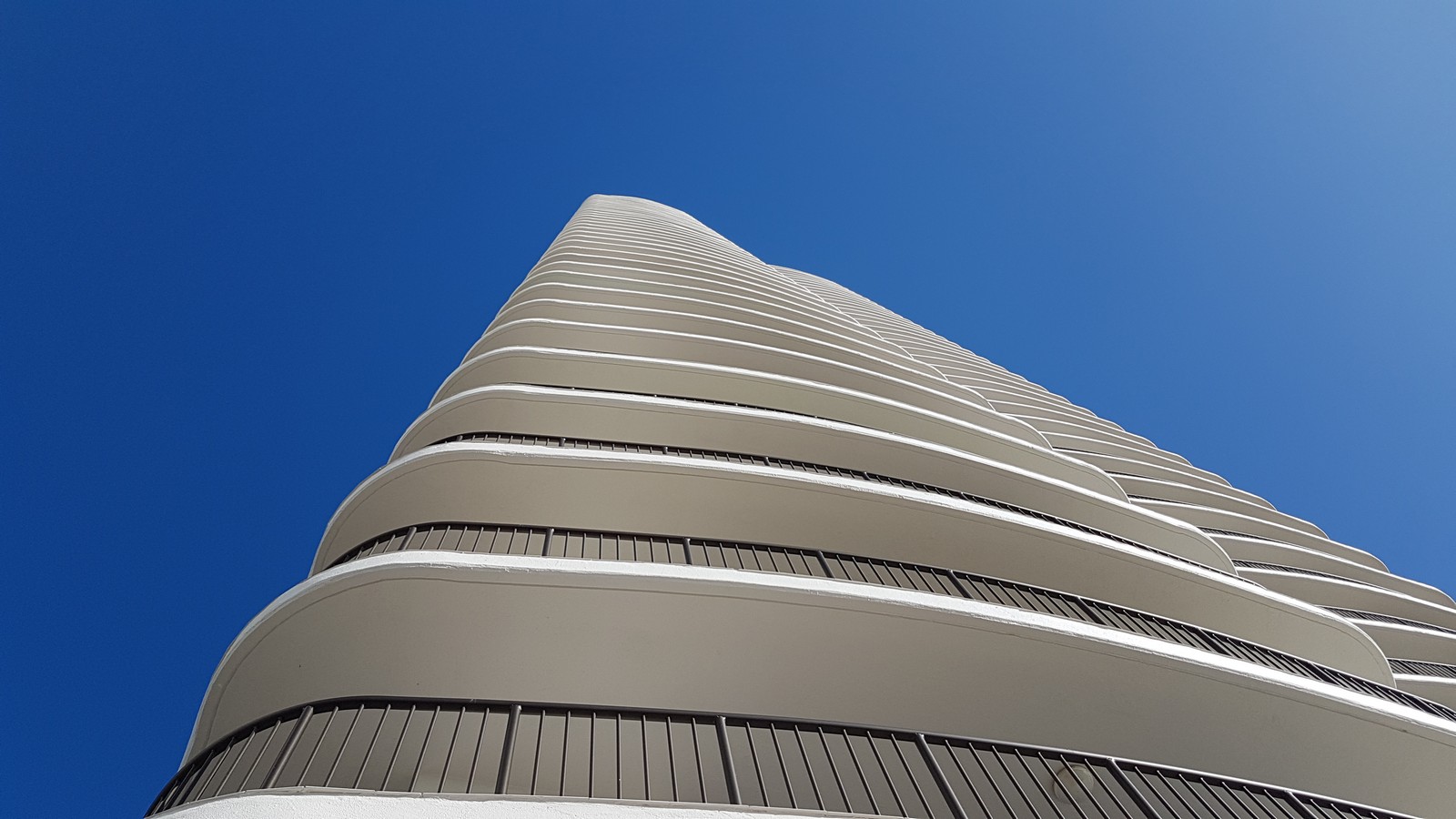
Body corporate painting is the repainting of a scheme's common property: the building exteriors, foyers, corridors, car parks, fences and shared structures that belong to all owners collectively rather than to any one lot. Under Queensland's Body Corporate and Community Management Act, the body corporate has a legal obligation to maintain common property in good condition, and painting is one of the largest recurring expressions of that duty, typically funded from the sinking fund and planned years ahead through the scheme's forecast. Responsibility splits along the boundary: common property is the body corporate's job, while surfaces inside a lot generally belong to the owner, with the scheme's plans and by-laws settling the grey areas like balcony ceilings and entry doors.
Plenty of articles explain that much. What committees actually need, and what this guide is really about, is the part that happens before the painters arrive: how a repaint gets approved well, and why the projects that go wrong almost always went wrong at the approval stage, not on the brushes.
Who is responsible for painting in a body corporate?
The body corporate maintains common property; lot owners maintain their lots. In practice, the exterior envelope of the building, external walls, roofs, balustrades, common balcony surfaces as defined by the scheme's plans, is nearly always common property, which makes the exterior repaint a body corporate project end to end. Committees managing mixed situations, a painted lot door on a common corridor, awnings, courtyard fences, should check the survey plan and by-laws before assuming, because arguments about who pays are far cheaper to have before the scaffold goes up.
How does a body corporate approve a painting project?
The mechanics run through the scheme's regulation module, but the shape is consistent: committees hold delegated spending authority up to their limit, larger projects go to the owners at a general meeting, quotes are obtained for major spending, and the money typically comes from the sinking fund, which Queensland schemes must plan through a forward forecast that anticipates exactly this kind of capital work. A repaint that appears in the forecast years early is a scheduled, funded, unremarkable event. A repaint that surprises the fund becomes a special levy conversation, which is where committee meetings get long.
The approval sequence that works: condition inspection first, a properly defined scope of works second, comparable quotes against that scope third, and the owner vote last, with the decision documented in the minutes. The order matters more than committees expect, and the next section is why.
What committees get wrong, and the one document that prevents it
After more than 40 years painting South East Queensland's strata buildings, we can tell you where repaints actually fail: at the scope. When quotes are gathered without a defined scope of works, every contractor prices a different job, the cheapest number usually describes the smallest job, and the gaps surface mid-project as variations, the cost blowouts that turn a funded repaint into a dispute. The wrong scope, or a scope that quietly misses things, is the single most expensive document a committee never wrote.
A proper scope specifies the surfaces and their measured areas, the preparation standard, the remedial work required before coating (cracked render, spalling concrete, failed sealants, waterproofing), the coating system by manufacturer specification, access methodology, and the warranty. It turns three quotes into a genuine comparison and turns the contract into a promise with edges. This is also where painting and building repair stop being separate trades: paint applied over unrepaired defects fails early regardless of quality, which is why we scope body corporate repaints with the remedial works included, delivered by our own in-house team under one contract rather than split across a painter and a separate repairer, the same way we run commercial painting projects right across the region.
How long it takes and what it costs
The two questions every committee asks next. Duration scales with the building: a walk-up complex typically runs two to six weeks, a mid-rise eight to sixteen, and a full tower three to six months, weather and remedial findings permitting. Cost is scoped rather than rated, because the access method, the remedial quantum and the building's detail vary too much between schemes for a per-square-metre figure to mean anything; the useful discipline for the sinking fund forecast is to get a condition inspection two to three years before the planned repaint and put a real, scoped figure in the forecast instead of an inherited guess. Committees that do this fund repaints from ordinary contributions. Committees that do not tend to meet the words "special levy" at the same meeting they meet the word "spalling".
The rest of the committee's checklist
Beyond the scope, the decisions that shape how the project lands on residents: timing against Queensland's weather and the building's calendar, colour decisions and whether they need owner approval under the by-laws, resident communication (notice periods, balcony access, parking and pool closures), and the contractor's safety systems for an occupied building. Ask every tenderer how they manage each; the quality of the answers predicts the quality of the project.
Frequently asked questions
What is body corporate painting?
The repainting of a scheme's common property, exteriors, shared interiors and structures, funded by the body corporate and governed by its maintenance obligations under Queensland's body corporate legislation.
Who is responsible for painting in a body corporate?
The body corporate paints common property; owners paint within their lots. The survey plan and by-laws decide the boundary cases, and it pays to check them before quoting.
How does a body corporate approve a painting project?
Through the scheme's spending rules: committee authority for smaller works, a general meeting for major projects, quotes against a defined scope, and funding planned through the sinking fund forecast.
How often do bodies corporate need to repaint?
In Queensland conditions, exterior cycles typically run 7 to 10 years, extending with a structured maintenance program. Our repaint cycle guide covers the planning in detail.
Planning a repaint, or trying to get one through committee? Talk to us about your building or call 1800 313 083, and start with the scope; everything else gets easier from there.